
BR Standard Class 9F facts for kids
Quick facts for kids BR Standard Class 9F |
|||||||||||||||||||||||||||||||||||||||||||||||||||||||
|---|---|---|---|---|---|---|---|---|---|---|---|---|---|---|---|---|---|---|---|---|---|---|---|---|---|---|---|---|---|---|---|---|---|---|---|---|---|---|---|---|---|---|---|---|---|---|---|---|---|---|---|---|---|---|---|
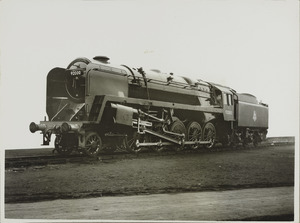
BR standard class 9F No. 92000 in 1953.
|
|||||||||||||||||||||||||||||||||||||||||||||||||||||||
|
|||||||||||||||||||||||||||||||||||||||||||||||||||||||
|
|||||||||||||||||||||||||||||||||||||||||||||||||||||||
|
|||||||||||||||||||||||||||||||||||||||||||||||||||||||
|
|||||||||||||||||||||||||||||||||||||||||||||||||||||||
The BR Standard Class 9F was a very powerful steam locomotive built for British Railways. It was designed by Robert Riddles in the 1950s. These amazing engines were made to pull heavy freight trains quickly over long distances. People sometimes called them 'Spaceships' because of their large size and unique look.
These locomotives were so good that they sometimes pulled passenger trains too! They could even reach speeds of up to 90 miles per hour (145 km/h). Many people thought they were some of the best steam engines ever made in Britain.
A total of 251 of these locomotives were built between 1954 and 1960. The very last one, named 92220 Evening Star, was the final steam locomotive ever constructed by British Railways. Most of them were taken out of service between 1964 and 1968. Today, nine of these historic engines have been saved and are preserved, including Evening Star.
Contents
Building These Mighty Engines
Why the 9F Was Needed
After World War II, British Railways needed new, strong locomotives. Even though some people thought diesel and electric trains were the future, steam engines were still very important. A man named Robert Riddles was asked to design a powerful new steam locomotive. It needed to pull very heavy loads quickly across long distances.
Riddles decided on a special design with ten driving wheels (called a 2-10-0 type). This design helped spread the weight evenly. It also gave the train excellent grip on the tracks. This new engine became one of Britain's most successful steam locomotives.
How the 9F Was Designed
The 9F was designed in 1951 to be super efficient. It could pull trains weighing up to 900 tons at speeds of 35 miles per hour. The large driving wheels were 5 feet (1.5 meters) in diameter. To help the long train go around curves, the middle driving wheels had no flanges. The other wheels had smaller flanges. This clever design allowed the locomotive to handle tight turns easily.
Where and When They Were Built
The first 9F locomotive was ready in January 1954. A total of 251 were built. Most were made at Crewe Works (198 engines), and the rest at Swindon Works (53 engines). They were numbered from 92000 to 92250.
The very last steam locomotive built by British Railways was a 9F. It was number 92220 Evening Star, completed in 1960 at Swindon. This was a big moment in railway history! Most 9Fs were taken out of service between 1964 and 1968, as steam trains were replaced by newer types.
Special Features and Experiments
The 9F locomotives were also used to test new ideas. Engineers wanted to make them even better, more powerful, or cheaper to run.
Franco-Crosti Boiler Experiment

Ten 9F locomotives were built with a special Franco-Crosti boiler in 1955. This boiler tried to reuse hot gases to heat the water, making the engine more efficient. It had a unique second chimney on the side. However, this experiment didn't work as well as hoped. It was too complicated and didn't save enough fuel. The special parts were later removed, but the engines kept their unique look.
Westinghouse Pumps for Ore Trains
Some 9F locomotives were fitted with special Westinghouse Pumps. These pumps were used to open the doors on large ore wagons. This allowed the heavy ore trains to unload automatically in less than a minute. This was very useful on the steep Consett line.
Mechanical Stokers and Chimney Designs
Engineers also tried out mechanical stokers on some 9F engines. These machines automatically fed coal into the firebox. The idea was to make it easier to keep the fire hot and burn lower-quality coal. However, human firemen were often just as good, especially on routes with frequent stops.
Another experiment involved a special chimney called a Giesl ejector on locomotive 92250. This design aimed to improve how the exhaust steam left the engine. While it looked different, it didn't show much improvement in performance.
The most successful change was adding a double blastpipe and chimney to some 9Fs. This helped the engines breathe better and produce more power. Many later 9Fs were built with this improvement.
How the 9F Performed
The 9F proved to be one of the best steam locomotives ever built in Britain. It was excellent at its main job: pulling heavy, fast freight trains across the country.
Record-Breaking Power
In September 1982, a preserved 9F engine named 92203 Black Prince set a record. It pulled the heaviest train ever hauled by a steam locomotive in Britain! The train weighed an incredible 2,178 tons.
Passenger Train Journeys

Even though they were designed for freight, 9Fs were surprisingly good at pulling passenger trains. They could run very fast, despite their smaller driving wheels. On one trip, a 9F pulling an express passenger train reached speeds over 90 miles per hour! The driver said the engine ran so smoothly he didn't realize how fast he was going.
However, British Railways decided to stop using 9Fs on regular express passenger trains. They worried that the high speeds might cause too much wear and tear on the engine's parts.
Special 9Fs, like 92220 Evening Star, sometimes pulled important passenger trains. Evening Star even wore a special green paint scheme, usually reserved for express passenger engines. 9Fs also often pulled extra 'Holiday Specials' on Saturdays, taking families to their vacation spots.
Accidents and Incidents
- On November 19, 1958, locomotive No. 92187 was involved in a freight train collision at Hitchin, Hertfordshire.
- On April 7, 1964, locomotive No. 92161 was hauling a freight train that derailed in Cumberland. This was due to wagon issues, high speed, and minor track problems.
Colors and Numbers

Most 9F locomotives were painted in a plain British Railways Freight Black color. They had the British Railways logo on the side of their tender. Their numbers ranged from 92000 to 92250.
Locomotive 92220 Evening Star was special. As the last steam engine built by British Railways, it was painted in a fancy Brunswick Green. This color was usually for fast passenger trains. Some 9Fs also had a blue spot on their cab. This spot showed how much weight the engine put on the tracks.
Preserved 9F Locomotives
Nine Standard Class 9F locomotives have been saved from being scrapped. These engines are now preserved in various locations. Evening Star is part of the National Collection, meaning it's a very important piece of history.
Only six of these preserved engines have been restored to working order. The first 9F to steam again in preservation was 92240 in 1990. Both factories that built 9Fs (Crewe and Swindon) have engines that survived. Most preserved 9Fs have the improved double chimney, but 92134 is the only one left with a single chimney.
Unfortunately, due to their unique wheel design, 9F locomotives are currently not allowed to run on the main railway lines. This is to prevent any issues with modern track layouts. However, you can still see them running on special heritage railways!
Models and Appearances
Model Trains
If you enjoy model trains, you might find models of the 9F! Companies like Kitmaster, Airfix, Dapol, Hornby, and Minitrix have all made models of this famous locomotive in different sizes, like OO scale and N scale.
In Cartoons
The character Murdoch from the popular children's show Thomas & Friends is based on a BR Standard Class 9F locomotive.
Images for kids
-
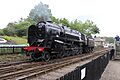
92134 at the North Yorkshire Moors Railway.
-
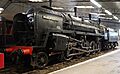
92203 Black Prince at Bressingham Steam and Gardens.
-
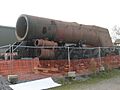
92207, unofficially named Morning Star, undergoing restoration.
-
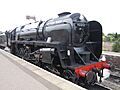
92212 at the Mid Hants Railway.
-
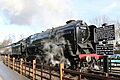
92214 at the Great Central Railway.
-
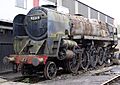
92219 stored at the Strathspey Railway.
-
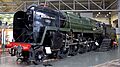
92220 Evening Star on static display at the National Railway Museum.
-
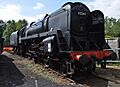
92240 at the Bluebell Railway.
-
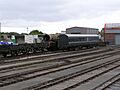
92245 at the Barry Tourist Railway.


.jpg)

.jpg)
